Every brokerage today can probably point to an AI tool they’ve introduced. But far fewer can point to consistent adoption. Even fewer can connect AI directly to predictable growth in productivity, transactions, or agent performance.
For years, AI has entered real estate as a set of optional tools. Agents are encouraged to explore, experiment, and self-manage adoption alongside an already demanding workload. The result is familiar across the industry: A small group of power users, uneven results and leadership teams left wondering why AI hasn’t delivered on its promise.
In order for real estate to move forward, AI has to change. From reactive to proactive, task-based to goal-focused, from traditional AI to agentic AI. And if brokerages want AI to drive the meaningful impact that it’s been promising, the next phase of transformation must look different. Adoption cannot be agent-led. It must be designed, deployed and led from the top.
Moving beyond traditional AI
Most AI tools used in real estate today are reactive. They wait for prompts, complete individual tasks, and surface insights rather than act. While useful in isolation, they still rely on agents to decide what to do next and when to do it.
That model doesn’t scale.
Agentic AI introduces a fundamentally different approach. Instead of focusing on tasks, agentic systems are built around outcomes. They can plan, execute and adapt across entire workflows autonomously to achieve defined goals.
This is the structure behind Lofty AOS, the first agentic AI operating system built specifically for real estate. Rather than asking agents to manage more tools, Lofty AOS takes ownership of core workflows, working continuously toward outcomes like prioritizing opportunities, activating databases and reducing the administrative burden on agents. For example:
- Social Agent can analyze what’s working in an agent’s market, build a content strategy, generate posts and schedule them automatically to keep agents consistently visible.
- Sales Agent functions like a virtual ISA, engaging and qualifying inbound leads 24/7, and booking appointments, so opportunities don’t slip through the cracks.
- Homeowner Agent helps keep past clients engaged with personalized home value updates, so agents stay top-of-mind until sellers are ready to move.
- AI Assistant supports day-to-day execution inside Lofty by surfacing cold leads, drafting messages and summarizing calls in seconds.
In practice, Lofty AOS doesn’t just provide insights; it takes action and drives toward outcomes.
Why leadership is the catalyst
Lasting AI transformation doesn’t happen because a brokerage introduces new tools. It happens when the “new way” becomes the default way work gets done. In other words, transformation does not equal adoption.
Adoption often looks like pilots, optional usage and novelty, where AI is treated as a helpful add-on. Transformation is different: It’s embedded, expected and operational, where AI becomes part of the system, not a separate step.
The reason this distinction matters is simple: Humans revert to default behaviors under pressure. Even motivated agents will fall back on familiar routines during busy seasons, tough markets, or high-stakes negotiations.
Resistance isn’t emotional; it’s rational. People worry that AI will make them worse at their job (loss of competence), take away control (loss of autonomy), or diminish their value (loss of identity). That’s why the most successful brokerages don’t try to “convince” agents to use AI more; they remove friction and bake AI into the daily workflow, so it’s easier to follow than ignore.
When AI is designed into the operating model, agents don’t need to think about using it. Opportunities surface automatically. Conversations are better prepared. Follow-up becomes consistent. Time shifts back toward high-value, revenue-generating activities. This is how AI becomes a force multiplier rather than another tool competing for attention.
A practical next step for leaders
The brokerages pulling ahead today aren’t chasing AI trends. They’re asking practical questions. Where are we relying on individual effort instead of systems? Which outcomes matter most? How can AI take ownership of the work that slows teams down?
The most important shift is recognizing that AI transformation is primarily a people and workflow challenge, not a technology one. Traditional task-based AI tools haven’t delivered the results that the industry expected because they depend on inconsistent adoption. Agentic AI changes that equation by making outcomes repeatable and scalable, helping brokerages increase productivity, reduce agent burnout and drive profitable growth.
For leaders evaluating their next move, the next steps don’t need to be complicated, but they do need to be intentional:
- Talk to your agents and managers about where AI is already showing up in daily work, and where friction still exists.
- Commit to making AI the default, not an optional add-on by embedding it into core workflows.
- Start crafting a plan focused on outcomes, accountability and consistent execution across the organization.
Lofty AOS is pushing the boundaries of AI in real estate — designed to think, act and operate autonomously at scale. Learn how agentic AI can transform your business at lofty.com/AOS.
More in Sponsored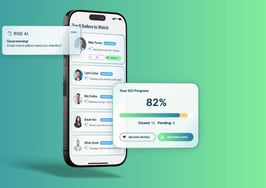 Sponsored Content
Why real estate needs a clear AI standard
Sponsored Content
Why real estate needs a clear AI standard
 Sponsored Content
The social media mindset driving real estate growth
Sponsored Content
The social media mindset driving real estate growth
 Sponsored Content
Innovative home warranties: How tech is transforming protection for today’s homeowners
Sponsored Content
Innovative home warranties: How tech is transforming protection for today’s homeowners
 Sponsored Content
Real estate recruiting is broken. Why fixing it actually matters right now
Sponsored Content
Real estate recruiting is broken. Why fixing it actually matters right now

