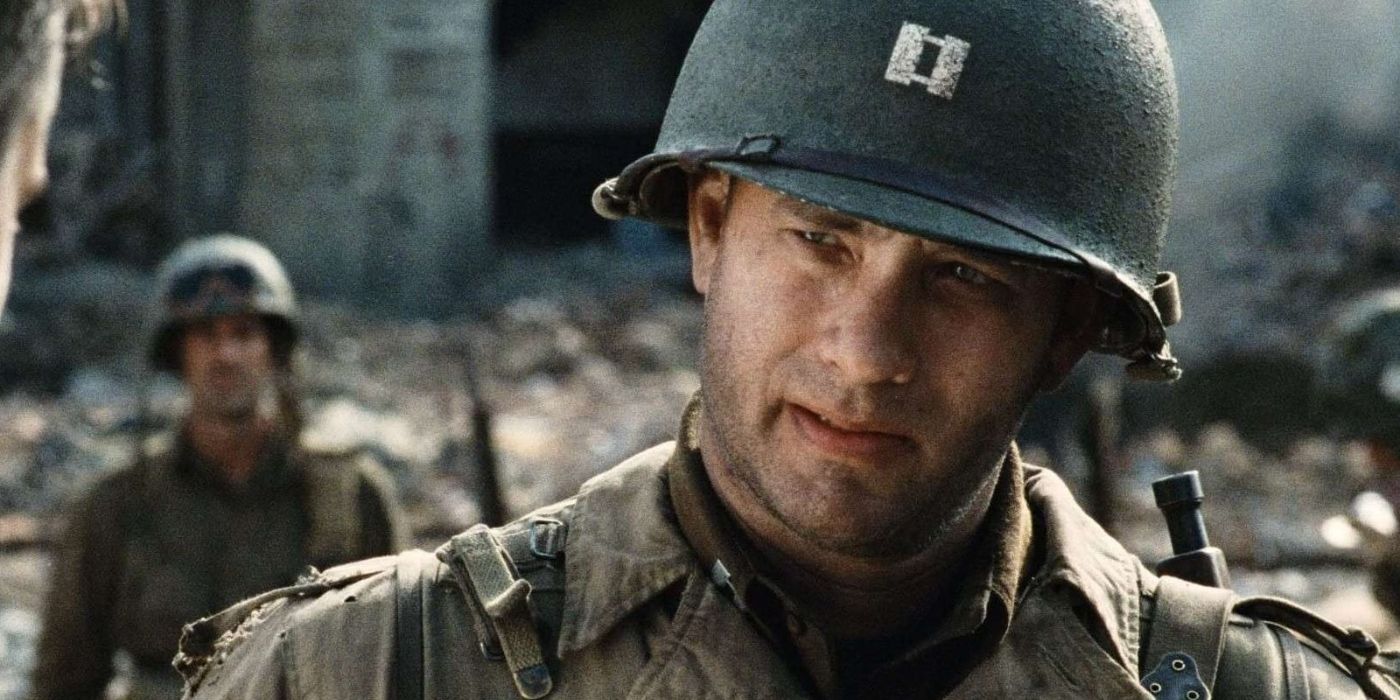
 Tom Hanks as Captain John Miller in a ruined town wearing his army helmet in Saving Private Ryan.Image via DreamWorks Pictures
 By
Safwan Azeem
Published 2 hours ago
By
Safwan Azeem
Published 2 hours ago
Feel free to connect with him or check out his work. He's everywhere — Upwork, YouTube, Spotify, SoundCloud, Collider, LinkedIn, Instagram.
Sign in to your Collider account Add Us On Summary Generate a summary of this story follow Follow followed Followed Like Like Thread 1 Log in Here is a fact-based summary of the story contents: Try something different: Show me the facts Explain it like I’m 5 Give me a lighthearted recapWar movies stay with you longer because they show how people respond when everything falls apart around them. In the chaos of battle, a soldier may be forced to choose between following orders and protecting those around him. A civilian might make impossible decisions to survive, watching homes and communities vanish. Each moment in these films carries weight, and the tension comes from how characters navigate danger, fear, and uncertainty.
These ten films capture the human side of war in different ways. They show soldiers confronting impossible odds, commanders balancing duty with conscience, and ordinary people forced into extraordinary circumstances. Watching them, you notice their choices and the consequences of those decisions. I have grown to love these films, and you will too, hopefully.
10 ‘Dunkirk’ (2017)
 Fionn Whitehead as Tommy, crawling on a beach surrounded by smoke and other soldiers in DunkirkImage via Warner Bros. Pictures
British soldiers are trapped on a beach in France, surrounded by enemy forces, with the sea as their only way out. Most of them do not know when help will arrive, or if it will arrive at all. They wait in long lines, watch ships explode before reaching shore, and learn very quickly that survival depends on patience as much as bravery. This is all that Dunkirk is about. Tommy (Fionn Whitehead) is one of those soldiers, and his experience reflects what thousands faced at Dunkirk.
As days pass, evacuation becomes more difficult. German attacks from the air destroy ships faster than they can be replaced, and every rescue attempt carries the risk of sinking before reaching open water. The film belongs on this list because it shows war as a test of waiting, restraint, and collective responsibility, and because it understands that sometimes getting out alive is the only success war allows.
9 ‘Platoon’ (1986)
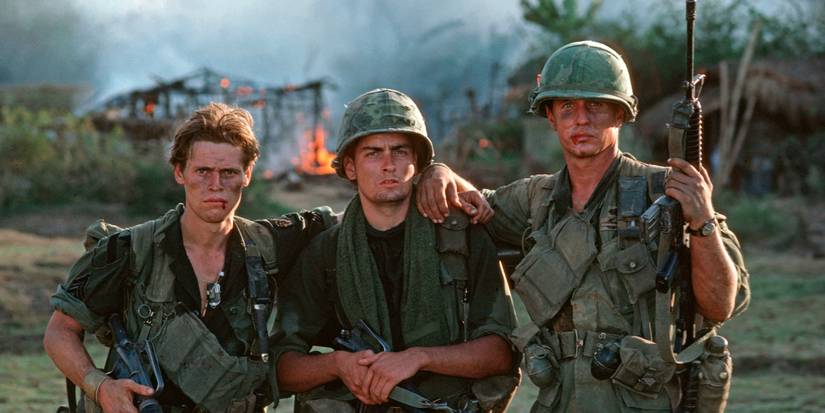 Charlie Sheen, Willem Dafoe, and Tom Berenger as soldiers look at the camera with a burning building behind in Platoon.Image via Orion Pictures
Chris Taylor (Charlie Sheen) comes to Vietnam believing the war will give him clarity, but the jungle quickly teaches him that certainty does not survive combat. He joins an infantry unit worn down by heat, fear, and endless patrols, where men measure their days by exhaustion. The platoon does not move as one body. It fractures under pressure, and that fracture defines daily life portrayed in the film.
Two senior soldiers shape the unit in opposite ways. Barnes (Tom Berenger) rules through force and suspicion, whereas Elias (Willem Dafoe) tries to preserve restraint inside a collapsing moral space. Platoon remains timeless because it shows war as a steady loss of inner balance, where survival often demands moral compromise.
8 ‘The Thin Red Line’ (1998)
 George Clooney stands in a field in 'The Thin Red Line' (1998).Image via 20th Century Studios
In The Thin Red Line, American soldiers advance through the tall grass of Guadalcanal, moving toward an enemy they rarely see and barely understand. Witt (Jim Caviezel) is the main character who observes the war from a distance. Around him, men carry private thoughts that surface during long silences between gunfire, and the film allows those thoughts to sit without any concrete ending.
Captain Staros (Elias Koteas) struggles to protect his men while answering to authority, and Colonel Tall (Nick Nolte) treats the campaign as a test of his own ambition. The Thin Red Line is a standout war movie because it refuses to shape war into a clean narrative.
7 ‘Black Hawk Down’ (2001)
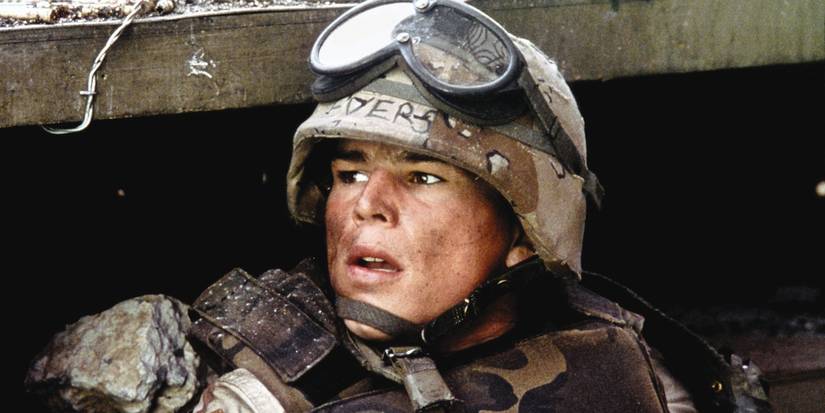 Josh Hartnett as Eversmann hiding and looking to the distance in Black Hawk Down (2001).Image via Sony Pictures Releasing
What begins as a routine military operation in Mogadishu collapses within hours, leaving American soldiers trapped in a city that no longer follows any plan. The film follows a group of U.S. Army Rangers who are sent to capture militia leaders, but when two helicopters are shot down, the mission turns into a desperate effort to extract the wounded. Matt Eversmann (Josh Hartnett) enters the operation expecting discipline and order, then learns how quickly those structures dissolve once communication fails.
Fighting spreads across the city, and soldiers stay close to one another because the streets are chaotic and dangerous. Sgt. Hoot Gibson (Eric Bana) relies on his skill and calm judgment to guide men through unexpected attacks, while younger soldiers struggle to understand how quickly the situation changes.
6 ‘Letters from Iwo Jima’ (2006)
 Ken Watanabe in Letters from Iwo JimaImage via Warner Bros.
The battle of Iwo Jima unfolds from inside the tunnels, where Japanese soldiers prepare for a fight they already know they cannot win. The film follows General Kuribayashi (Ken Watanabe) as he organizes a defensive strategy, while ordinary soldiers write letters home that may never be delivered. Saigo (Kazunari Ninomiya) enters the army as a reluctant conscript and carries resentment against the very things that need his attention.
As the American forces land, soldiers in the tunnels spend hours waiting for what might never come. Each order passes quickly along the narrow corridors, and men carry it out even though every instruction could decide life or death. Kuribayashi (Ken Watanabe) balances his duty to command with care for the men under him, and weighs every choice against the cost it may bring. By the end, the soldiers are exhausted and uncertain, but each small decision has shaped who survives and who endures.
5 ‘Paths of Glory’ (1957)
 Kirk Douglas in Paths of GloryImage via United Artists
Paths of Glory portrays the trenches of World War I, where French soldiers are ordered to attack an enemy position that seems impossible to take. Colonel Dax (Kirk Douglas) leads men who know the assault will likely fail, yet they are expected to follow orders without question. Dax tries to defend his men when the army seeks to punish them for failure. This whole act reveals the tension between duty to command and responsibility to human life.
After the attack on the enemy trenches fails, the army chooses a few soldiers at random to face execution in an attempt to preserve morale, and the decision terrifies the men who survived the assault. Paths of Glory is an unforgettable watch because it exposes the quiet cruelty of war and demonstrates that the hardest battles sometimes take place in the decisions of men who command others.
4 ‘Apocalypse Now’ (1979)
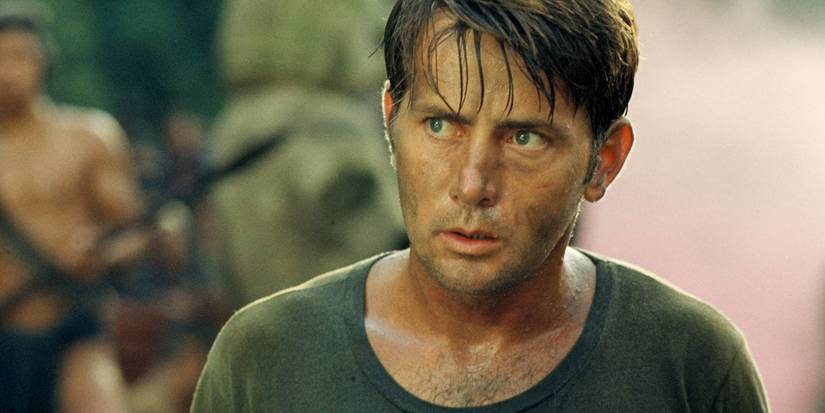 Martin Sheen is muddy and looks anxious in Apocalypse Now.Image via United Artists
During the Vietnam War, Captain Willard (Martin Sheen) is sent upriver on a mission to eliminate Colonel Kurtz (Marlon Brando), a once-respected officer who has gone rogue. The journey moves through dense jungle, villages, and rivers, and along the way, Willard confronts the disorienting chaos of the war, the unpredictability of human behavior, and the moral compromises that soldiers are forced to make. Each encounter is a test of judgment, patience, and survival.
The crew of the patrol boat experiences fear and confusion as they advance, and characters like Chef (Frederic Forrest) and Lance (Sam Bottoms) navigate their own responses to violence and disorder. When Willard finally reaches Kurtz, their confrontation is still the most talked-about scene in war movie history.
3 ‘Saving Private Ryan’ (1998)
 Jeremy Davies as Corporal Upham in Saving Private Ryan
Image via Paramount Pictures
Jeremy Davies as Corporal Upham in Saving Private Ryan
Image via Paramount Pictures
During the Normandy invasion, a small group of U.S. soldiers is sent on a mission to find and bring home Private James Ryan (Matt Damon), whose brothers have already died in combat. Captain Miller (Tom Hanks) leads the squad through destroyed towns, fields under fire, and unexpected ambushes, and he forces the men to make decisions with life-or-death consequences.
Subscribe to our newsletter for deeper war-film insights
Join our newsletter to go beyond one list: curated analyses of war films, director perspectives, context, and recommended viewings that deepen your understanding of the human choices, leadership dilemmas, and survival themes onscreen, plus notes on other film topics. Subscribe By subscribing, you agree to receive newsletter and marketing emails, and accept Valnet’s Terms of Use and Privacy Policy. You can unsubscribe anytime.The film follows their journey closely, showing how ordinary soldiers respond to chaos and danger in moments of war. Along the way, the soldiers confront moral dilemmas, from sparing an enemy to protecting civilians, and each decision leaves a mark on their minds. Corporal Upham (Jeremy Davies) learns how war challenges principles in ways schoolbooks cannot prepare anyone for. Saving Private Ryan is one of the best war movies out there because it combines relentless realism with human stories.
2 ‘Come and See’ (1985)
 Aleksei Kravchenko as Flyora Gaishun, staring horrified at something offscreen while a gun is held to his temple in Come and SeeImage via Sovexportfilm
Set during the Nazi occupation of Belarus, Come and See follows Florya (Aleksei Kravchenko), a young boy who witnesses the horrors of war firsthand. The story begins with Florya eager to join the partisans, but he quickly discovers that fighting brings trauma. Villages are burned, families are killed, and every day brings a new loss, which forces him to grow up in a matter of weeks.
The film moves with him through forests, ruined towns, and the chaos of ambushes. Older soldiers like Roubejka (Liubomiras Laucevičius) guide him, but their own exhaustion shows that even experience offers little protection under harsh circumstances. Come and See is an important film because it shows war as a relentless erosion of innocence, and beautifully captures suffering and survival in different ways.
1 ‘Lawrence of Arabia’ (1962)
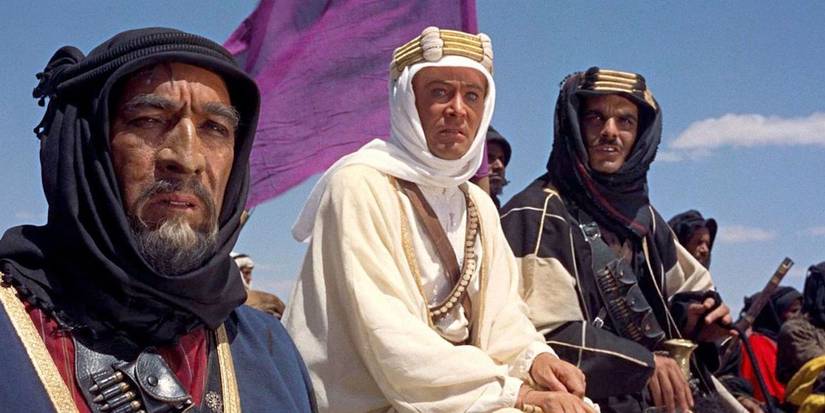 Auda Tayi (Anthony Quinn), Lawrence (Peter O'Toole), and Sharif Ali (Omar Sharif), looking disturbed in 'Lawrence of Arabia'Image via Columbia Pictures
During World War I, T. E. Lawrence (Peter O’Toole) is sent to Arabia to coordinate the British effort against the Ottoman Empire, and he quickly becomes involved in tribal politics, desert warfare, and personal challenges that test both his courage and identity. The film follows his journey across deserts and shows the physical and moral difficulties of leading men through harsh environments.
Lawrence’s relationships with tribal leaders like Prince Faisal (Alec Guinness) and soldiers around him highlight the complexity of alliance and loyalty, and his personal ambitions sometimes conflict with the cause he serves. Each campaign demonstrates that leadership is not just about victories but about managing people, culture, and expectations of those under you. Lawrence of Arabia is a must-watch if you’re a war movie fanatic.
 Like
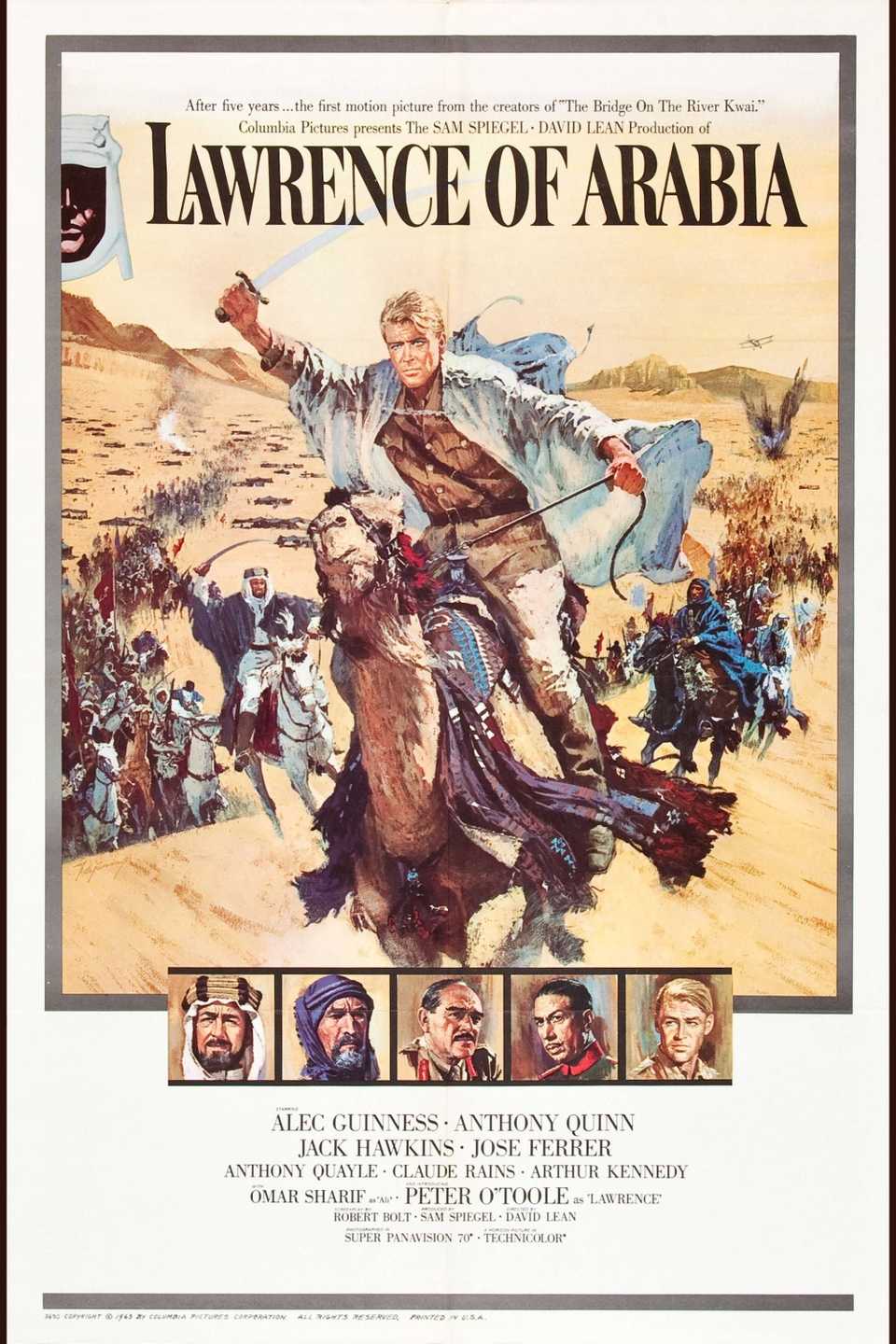
Lawrence of Arabia
PG
War
Biography
Adventure
History
Drama
Release Date
December 11, 1962
Runtime
228 minutes
Director
David Lean
Writers
Robert Bolt, Michael Wilson
Like
Lawrence of Arabia
PG
War
Biography
Adventure
History
Drama
Release Date
December 11, 1962
Runtime
228 minutes
Director
David Lean
Writers
Robert Bolt, Michael Wilson
Cast
See All-
 Alec Guinness
-
Omar Sharif
 Expand
Collapse
Expand
Collapse
-
 Movie
Movie
-
 Dunkirk
What To Watch
 July 20, 2025
The 72 Best Movies on Netflix Right Now
Trending Now
1:51
July 20, 2025
The 72 Best Movies on Netflix Right Now
Trending Now
1:51
 30 Steamy Movies to Get You in the Mood on Date Night
 The 10 Most Perfect War Movies, Ranked
 The 10 Greatest Thrillers of 2025, Ranked