
 By
Andy Boxall
Published Feb 28, 2026, 9:30 AM EST
Andy is a seasoned technology journalist with more than 15 years experience in the mobile industry, writing for Digital Trends, Wired, and more. During that time he has reviewed hundreds of smartphones and tablets, dozens of smartwatches, and a host of smart rings and smartglasses too.
His daily mobile tech life includes Android and iOS devices, smart rings, and a smartwatch unless it's a special ocassion, when a traditional watch takes its place on his wrist. He has attended multiple CES, MWC, and IFA tradeshows, has a passion for photography and cars, listens to far too much K-pop, and always has a strong opinion on the state of the tech industry.
You can find Andy's portfolio of work on his Authory page.
Sign in to your Android Police account
Add Us On
Summary
Generate a summary of this story
follow
Follow
followed
Followed
Like
Like
Thread
Log in
Here is a fact-based summary of the story contents:
Try something different:
Show me the facts
Explain it like I’m 5
Give me a lighthearted recap
By
Andy Boxall
Published Feb 28, 2026, 9:30 AM EST
Andy is a seasoned technology journalist with more than 15 years experience in the mobile industry, writing for Digital Trends, Wired, and more. During that time he has reviewed hundreds of smartphones and tablets, dozens of smartwatches, and a host of smart rings and smartglasses too.
His daily mobile tech life includes Android and iOS devices, smart rings, and a smartwatch unless it's a special ocassion, when a traditional watch takes its place on his wrist. He has attended multiple CES, MWC, and IFA tradeshows, has a passion for photography and cars, listens to far too much K-pop, and always has a strong opinion on the state of the tech industry.
You can find Andy's portfolio of work on his Authory page.
Sign in to your Android Police account
Add Us On
Summary
Generate a summary of this story
follow
Follow
followed
Followed
Like
Like
Thread
Log in
Here is a fact-based summary of the story contents:
Try something different:
Show me the facts
Explain it like I’m 5
Give me a lighthearted recap
We've been spoiled by a wide variety of excellent Android tablets over the past year, and now Xiaomi is coming to the party with the Xiaomi Pad 8 Pro.
I’ve been using it as my laptop alternative and media machine for a few days, and it has really impressed me. Here’s what it’s like.
Xiaomi Pad 8 Pro specs
All the key information

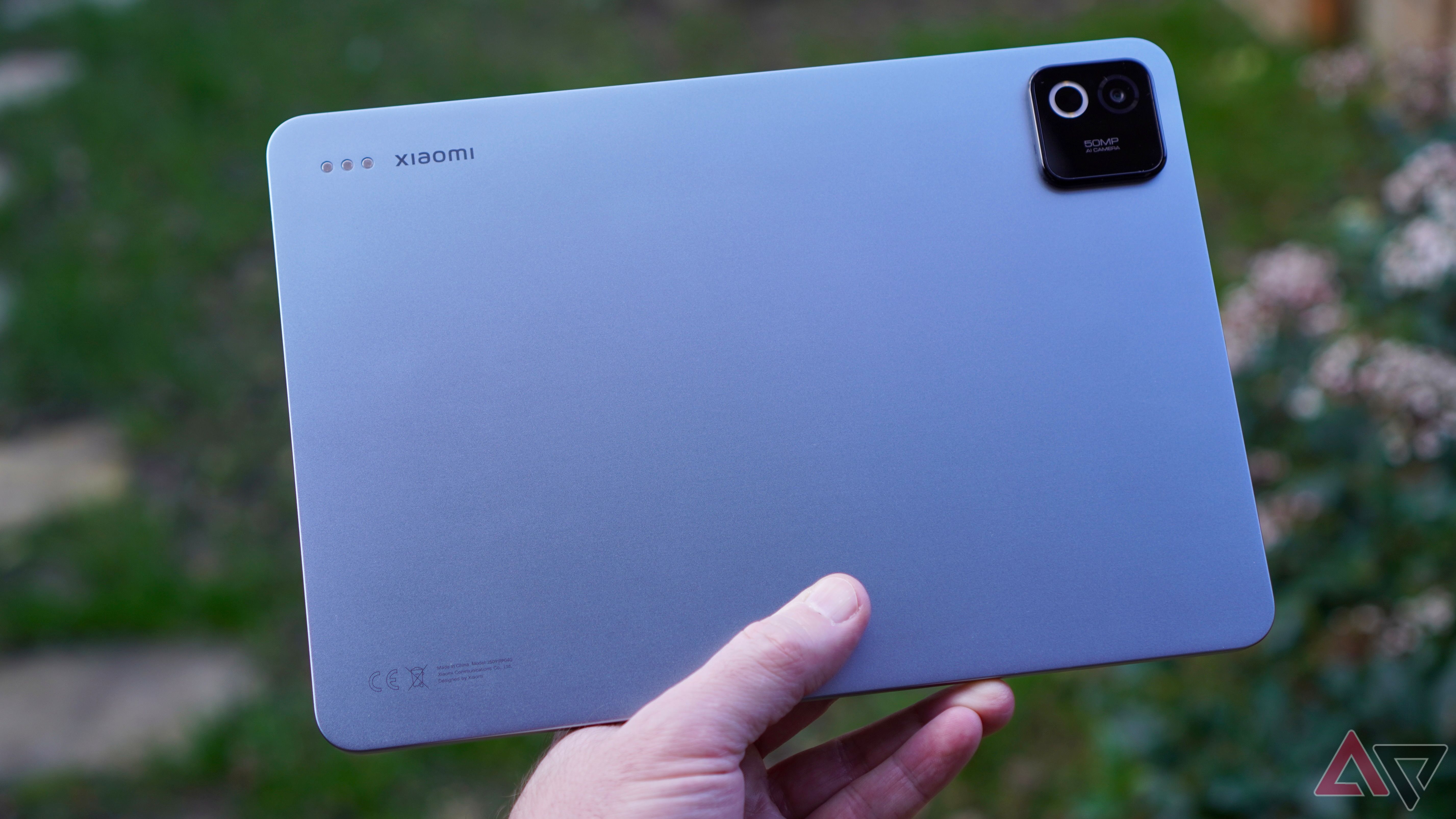
Despite the name suggesting this is a compact tablet, the Xiaomi Pad 8 Pro has an 11.2-inch screen, all wrapped up in a surprisingly slim, metal, 485 gram chassis with an 85% screen-to-body ratio.
It’s a real winner too, with a 3200 x 2136 pixel resolution, a 144Hz refresh rate, Dolby Vision, and adaptive HDR support. At maximum brightness, it’s still perfectly legible in sunny conditions, and text pops off the screen.
Powering the tablet is a Qualcomm Snapdragon 8 Elite. That's right, it’s not the Gen 5 version, or the non-Elite Gen 5 either, but the flagship chip from a couple of years ago. Does it matter? Not really, because the tablet has handled everything I’ve wanted without an issue, from split-screen multi-tasking to video and games.
Other features include a big 9,200mAh battery with 67W wired charging, a 50-megapixel rear camera and a 32MP front camera, plus quad speakers, Dolby Atmos, stylus support, and Xiaomi’s Hyper OS 3 software.
Using the keyboard accessory
A must-buy for productivity folk
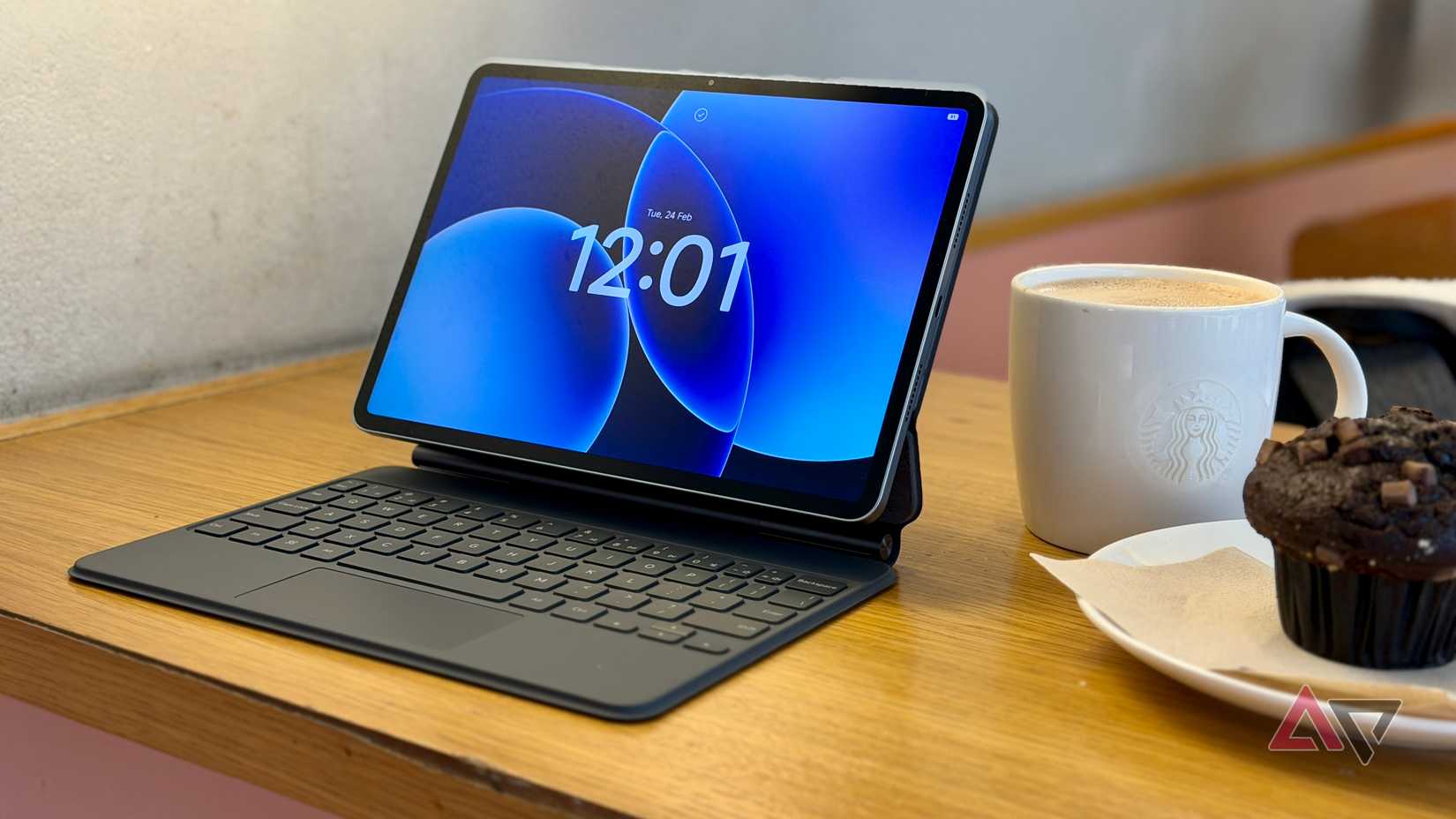
You can buy the Xiaomi Pad 8 Pro with a keyboard case, which closely replicates Apple’s Magic Keyboard for the iPad, and therefore Poco’s keyboard for the Poco Pad X1 too.
It has a solid base, and the upright section magnetically attaches to the back of the tablet, so it “floats” above the keyboard. There's a small trackpad beneath the keyboard.
The keys are neatly spaced, have a pleasant feel, and just the right amount of travel to make fast, accurate typing possible. It is quite noisy though, and I was aware people around me could hear the hollow tapping as I typed away. The trackpad is decent, but the click sounds and feels cheap. However, it's still usable, and, due to the tablet's touchscreen, it likely won't get used all that often anyway.
You’re reading words typed on the Xiaomi Pad 8 Pro’s Focus Keyboard right now, and our news on Tag Heuer’s Formula One smartwatch, and the Samsung Galaxy Buds4 Pro was also written on it when out and about. If the keyboard was annoying, or I couldn’t get into a decent typing rhythm almost immediately, this wouldn't happen.
Is Hyper OS 3 good for work?
It's fine, but Android struggles

Android falls behind Apple’s iPad OS when it comes to work and app support, but Xiaomi has tried to make the software compete when it comes to getting things done.
Setting up a 5:5 aspect ratio split screen app view is easily done through the task bar, or from the helicopter view, and a third floating window can also be displayed over the top.
The software is fast, and the animations are never intrusive, giving Android a good start when it comes to productivity. However, Android apps are often a pain. It's shocking how badly Google Docs formats itself in split screen mode, hiding text behind buttons and forcing text to remain at the very bottom of the screen while typing.

The software is also clearly lifted from a smartphone, such as when you set your fingerprint, it tells you to “lift your finger when you feel a vibration,” which never comes, because unlike Xiaomi’s phones, there's no haptic feedback on the Xiaomi Pad 8 Pro.
As already mentioned, I’ve successfully worked on the Xiaomi Pad 8 Pro, but Android doesn’t make it easy, and I wouldn't want to completely replace my laptop with it entirely. This isn't a Xiaomi Pad 8 Pro issue, but a wider one that affects all Android tablets.
What else do you need to know?
Price is still to come

What else do you need to know? The screen may be an LCD, but nothing is lost over an OLED when watching video. The screen looks great, assisted by its overall brightness, and the quad speakers have masses of volume, although they do lack a little punch. It's still a great media machine.
The biometric security, which covers fingerprint and face unlock, is fast and reliable. It's also great to see the fingerprint sensor in the power button, and not on the screen like the Samsung Galaxy Tab S11.

I haven't put the battery through its paces much yet, but four hours of general screen-on use takes about 50% of the cell's charge.
At the time of writing, Xiaomi hasn’t shared how much the Xiaomi Pad 8 Pro will cost, or where it will be released. The Pad 7 Pro was sold in the UK for £450 (about $610), and if its replacement comes in at around the same price, it’ll compete favorably with the Galaxy Tab S10 FE and OnePlus Pad 3.
Xiaomi does not officially sell its hardware in the US, but devices can be imported if you’re keen.
Follow Followed Like Share Facebook X WhatsApp Threads Bluesky LinkedIn Reddit Flipboard Copy link Email Close Trending Now Why Google Messages is, hands down, the best way to text on Android
 How to install the Google Play Store on every Amazon Fire tablet
 My Pixel Camera is infinitely better since I tweaked these settings