Julian Buckner of Vesta Home shares strategies for raising the price point of your average listing and increasing your commission by staging high-end homes effectively.
Inman On Tour
 Inman On Tour Nashville delivers insights, networking, and strategies for agents and leaders navigating today’s market.
When we launched Vesta Home in 2017, staging was considered a “nice-to-have” extra, a tool reserved only for trophy listings from the most sophisticated brokers. Most agents believed that buyers could imagine the potential in a home — with a little help.
TAKE THE INMAN INTEL INDEX SURVEY
Today, that mindset has changed completely, especially for luxury listings. Elevated staging is a foundational component of a successful sale, so if you want to raise your price point, it must be a key component of your strategy.
High-net-worth buyers expect finished product, not possibilities, and they’ll frequently choose to purchase a home fully furnished after seeing it professionally staged with high-end furnishings and artwork.
That means that sellers must get on board as well, and many top agents now refuse luxury listings unless sellers agree to stage. The cost of not staging is simply too high in terms of time, commission and reputation.
Luxury staging shows you’re playing in a different league
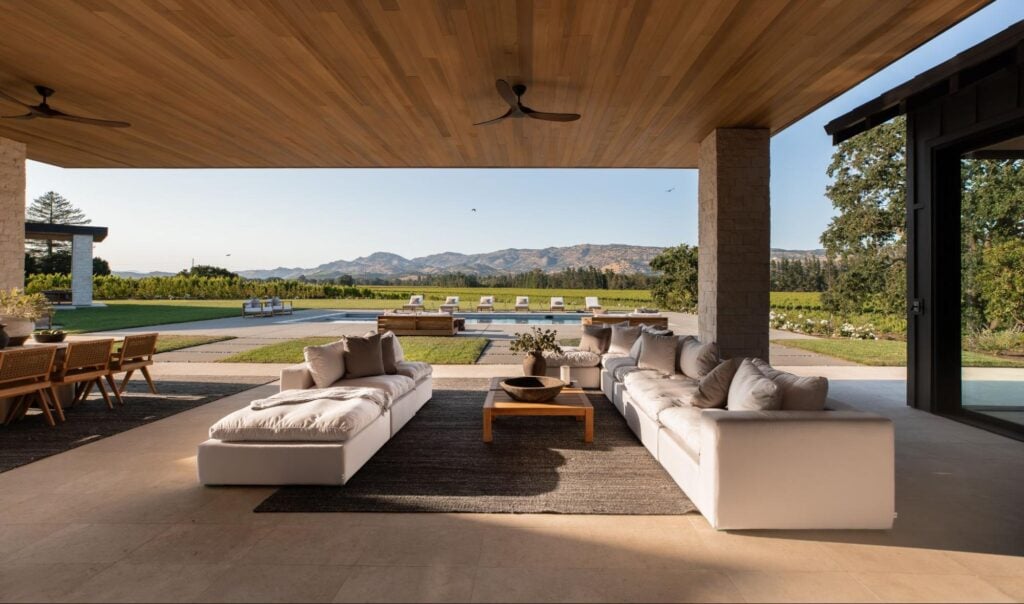
Indoor/outdoor living is a major draw for affluent buyers; this Vesta-staged Napa, CA’s exterior lives just as beautifully as the interior—a true extension of the home. Photography by Lauren Sullivan.
If your marketing materials scream sophistication but the house you’re showing looks fully outfitted by IKEA or Wayfair, the cognitive dissonance erodes your credibility and your brand.
You don’t raise your price point by asking for a higher number. You raise it by delivering a higher-level experience and a higher-level product.
High-end buyers expect a curated lifestyle, which blurs the line between staging and interior design. The level of detail that used to be reserved for private design clients is now expected during the walk-through of a luxury listing.
When you can deliver that elevated experience, you enhance your credibility in this market and become a viable option when they, or their representatives, are looking for real estate.
Why generic furniture caps your ceiling
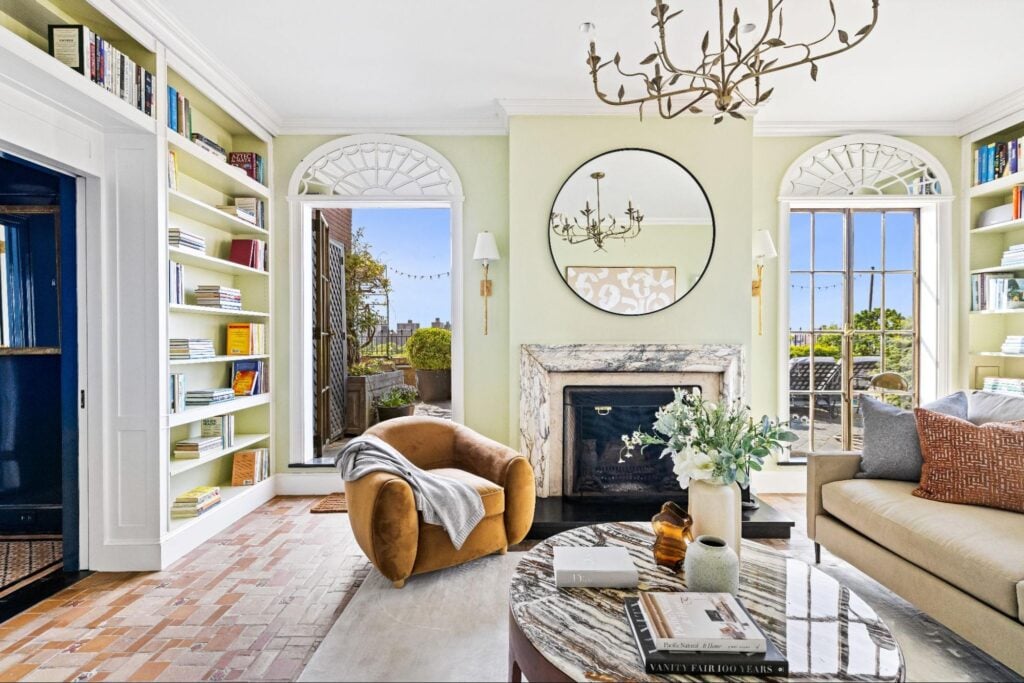
In Barbara Corcoran’s sunroom, Vesta designers removed a large rug covering the original stone floor and added a smaller, more symmetrical layout with a sofa and umber velvet chair, creating a more intimate fireplace “moment.” Photography by Melanie Greene, GreenHouse NYC.
While some homes can be effectively staged with generic rental furniture, high-end listings require high-end design and craftsmanship. Custom, performance-quality furnishings designed specifically for the space you’re showing results in a fully turnkey luxury listing.
Here’s why customization matters for agents who want to improve their price point:
- Differentiation: Discerning buyers tour multiple properties in a short period of time. Unique, custom design helps your listing stand out and stick.
- Emotional connection: Buyers aren’t buying square footage. They’re buying the lifestyle they see reflected in the space.
- Optionality: Marketing a property as “available fully furnished” attracts global, second-home and time-pressed high-net-worth buyers.
If you want to move from $5 million to $10 million listings, you need to present a space that doesn’t feel interchangeable.
How to talk to your seller about staging
Luxury staging isn’t just about selling faster. It’s about supporting a stronger list price — and defending it.
According to the National Association of Realtors, home staging can mean up to a 10 percent increase in sale price and a “significant” reduction in days on market. Now apply that math to a $10 million-dollar property:
- Just a 2 percent price increase = $200,000
- One month of carrying costs saved = ~$100,000 (taxes, upkeep, cost of capital)
- Total value creation: ~$300,000 at minimum
The typical staging investment on a high-end project is $30,000 to $50,000.
That translates to 600 percent to 1,000 percent ROI. You’d be hard-pressed to find another investment during a sale process with that level of return and that little risk.
Remember, NAR’s stats are based on all staging across all price points. For the high-end segment of the market that we serve, our 2025 data shows that Vesta-staged properties listed at $2 million-plus sold a whopping 45 percent faster than the market.
For agents, this reframes the staging conversation with your sellers. Selling a home is typically one of the largest financial transactions in a person’s life. Staging is not about aesthetics — it’s about optimizing the ROI on this massively impactful transaction.
Time (and stale inventory) kills deals
Beyond the carrying cost, there’s the psychological impact of a home sitting on the market longer than it could with effective staging. The longer a home sits, the more buyers assume, “Something must be wrong with it.” That leads to price drops and a shift in leverage to prospective buyers.
That’s why the logic of “list now, stage later” just doesn’t work. By presenting a fully realized lifestyle space at launch, you create desirability and momentum. That helps to protect (and increase) your price point.
If your goal is to move upmarket, you cannot afford listings that languish.
5 ways to raise your brand profile and price point with luxury staging
Drill down on these five points to put luxury staging to work for your business:
- Make staging non-negotiable in your listing presentation at higher price tiers — say $2 million-plus.
- Position staging as risk mitigation and value creation, not décor.
- Partner with design-forward staging firms that tailor styles to the home’s architecture and target buyer, not generic rental companies.
- Market the property as fully furnished — an appealing option to some buyers. Ask the staging company if your client can receive a commission if the furniture sells with the house, recouping some of their investment.
- Launch listings with fully realized visuals rather than empty rooms or partial staging.
If you want to break into a higher price point, your listings must look like they belong there. Because at the top of the market, staging isn’t about filling space. It’s about engineering the kind of desirability that drives price.
Julian Buckner is the founder and CEO of Vesta Home. Connect with him on Instagram and LinkedIn.
Topics: leadership | productivity Show Comments Hide Comments Sign up for Inman’s Morning Headlines What you need to know to start your day with all the latest industry developments Sign me up By submitting your email address, you agree to receive marketing emails from Inman. Success! Thank you for subscribing to Morning Headlines. Read Next High-stakes staging: Secrets for turning ultra-luxury mansions into livable homes
 Secrets to ultra-luxury staging: customize, communicate and get it all done quickly
 What Guinness can teach you about building a brand that lasts
 The department store parallel: A warning for the real estate industry
More in Luxury Lens
The department store parallel: A warning for the real estate industry
More in Luxury Lens
 Compass rewards listing agents with new lead and referral program
The department store parallel: A warning for the real estate industry
Compass rewards listing agents with new lead and referral program
The department store parallel: A warning for the real estate industry
 A national MLS could be great, execs say, but feasibility and antitrust issues pose a challenge
 @properties Christie's launches homeseller renovation program
Read next
Read Next
High-stakes staging: Secrets for turning ultra-luxury mansions into livable homes
Secrets to ultra-luxury staging: customize, communicate and get it all done quickly
 Leadership, not location: The future of agent engagement
 CoStar lays off staff amid Homes.com cost-cutting campaign


